


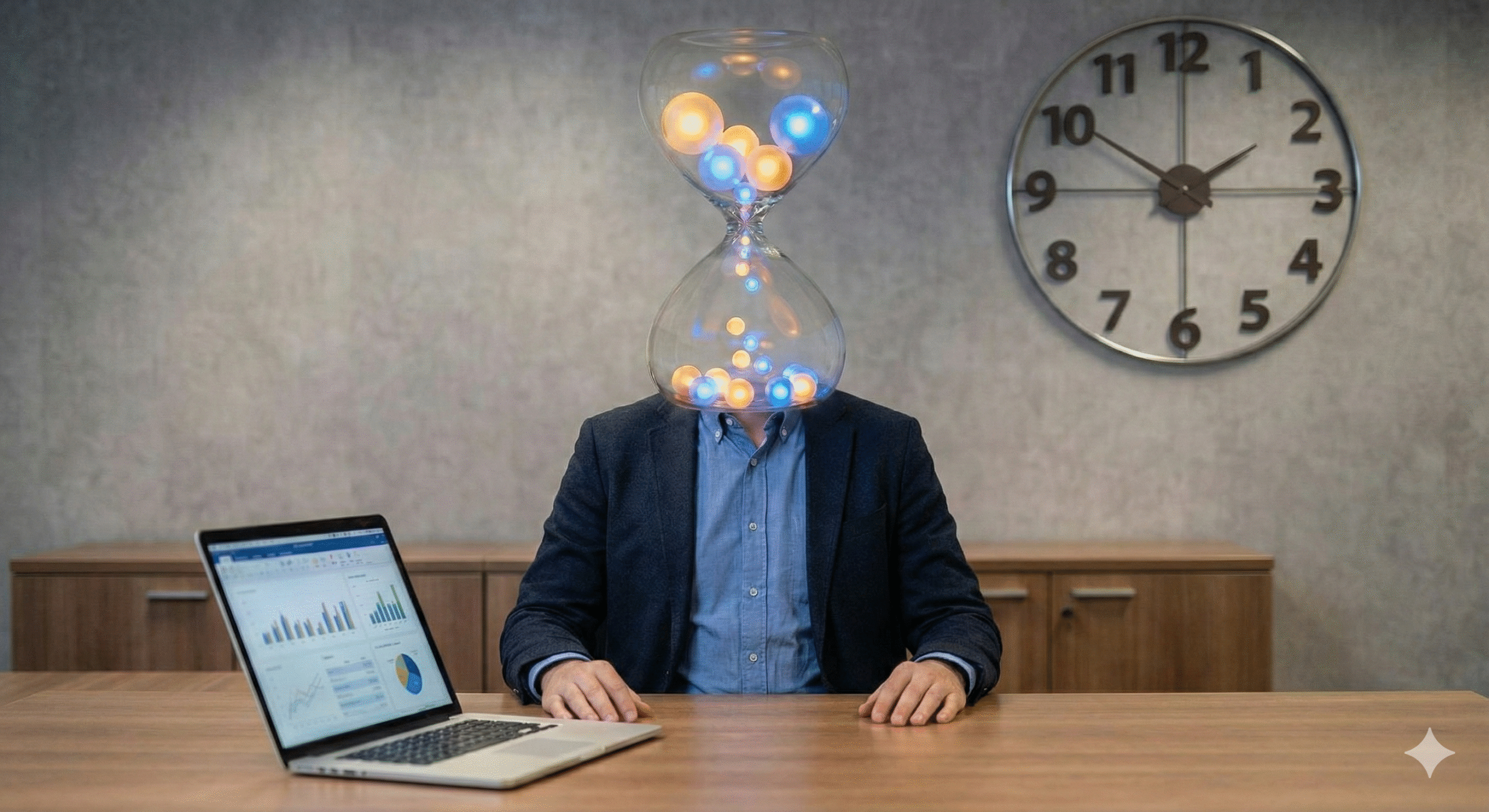
It’s Not Time Management, It’s Energy Management
Years ago, my friend John Walter Baybay said something in passing that stuck with me: “It’s not time management, it’s energy management.” It made sense when he said it, but I filed it away like one of those ideas you appreciate but don’t really use.
Then I decided to treat myself as if I had ADHD. That’s when I went back to John’s phrase and actually unwrapped it.
Because here’s the thing about ADHD and energy: neurotypical people generally wake up with a sense of how many “spoons” they have – how much focus, how much capacity, how much gas in the tank. ADHD people? We have no idea. Some days we wake up ready to conquer the world. Other days we can barely make it to lunch. The number of spoons changes daily, sometimes hourly, and we don’t know until we’re already running on empty.
This unpredictable energy capacity – what the ADHD community calls “spoon theory” borrowed from chronic illness advocacy – reflects something real that researchers are starting to understand better. Neuroscientists talk about ADHD involving dysregulation in our brain’s “arousal and activation systems” – basically, the mechanisms that are supposed to give us steady, predictable energy throughout the day don’t work the same way.
So time management – the kind where you schedule tasks into neat blocks and expect to execute them – assumes you have consistent energy to match your calendar. For ADHD brains, that’s like building a house on sand.
Energy management is different. It’s about working with your actual capacity instead of pretending you have energy you don’t.
Before We Go Further: My Setup and Important Context
I work from home and I choose projects that pay for results, not hours clocked. This gives me massive flexibility that most people don’t have. If you’re a lawyer with billable hours, a doctor with rounds, a CPA during tax season, or working a 9-to-5 where someone’s tracking your desk time – your version of energy management will look different from mine.
More importantly: This framework is complementary, not replacement. Research consistently shows that medication (stimulants like Adderall/Ritalin or non-stimulants like Strattera) combined with behavioral therapy produces the strongest results for ADHD. The approaches I’m sharing here work alongside these evidence-based treatments, not instead of them. If you’re not yet working with a physician and therapist who understand ADHD, that should be your first step.
But the principles of energy management still apply regardless of your situation. You just need to find your version within your constraints.
The Four Foundational Pillars
1. Audit Your Energy Flow
You can’t manage energy if you don’t know your pattern.
Most ADHD advice assumes everyone has the same energy curve. They don’t. Some people wake up instantly energized. Others (like me) need an hour or more to boot up. Some peak in the morning, others at night. Some have steady energy that just varies day-to-day in unpredictable ways.
Your first job: Track your actual pattern.
For me, I realized I’ve had this thing since I was a kid – upon waking, I just stare blankly. I’m booting up. It feels like I’m in a daze and can’t move. This used to take me two or three hours. Now, with the right support, it takes about an hour. But it’s still there.
After I boot up, I have high physical energy in the morning. Mental energy peaks after my first meal. By mid-afternoon, I’ll crash hard if I don’t force a break. Then I get a second wind in the evening.
Your pattern is probably different. That’s fine. The point is to know it so you can work with it instead of against it.
Don’t schedule your hardest mental work during your natural low-energy window and then wonder why you can’t focus. Don’t force yourself to exercise at night if your body peaks in the morning. Don’t fight your biology – map it, then design around it.
This approach addresses something well-documented in ADHD research: we tend to have boom-bust cycles. We hyperfocus intensely, then crash. We sprint until we burn out. Knowing your pattern helps you prevent the crash before it happens.
2. Support Your Biology with Smart Nutrition
Once you know your pattern, you support it with the right fuel and chemistry.
For me, this meant completely changing how I eat.
What the research actually supports for ADHD:
The best evidence points to Mediterranean and DASH diets – not restrictive approaches. Studies show that people with ADHD who follow Mediterranean eating patterns (lots of vegetables, fruits, whole grains, fish, olive oil, moderate dairy and poultry) have significantly better outcomes. One study found that low adherence to Mediterranean diet was associated with 7 times higher odds of ADHD.
The DASH diet (Dietary Approaches to Stop Hypertension) also shows benefits in controlled trials – one 12-week study found significant ADHD symptom improvements.
What I actually do: I eat mostly proteins, fats, and vegetables – similar to low-carb or ketogenic approaches. I feel like I work better on steady energy rather than glucose spikes and crashes. But I need to be honest: there are no randomized controlled trials showing ketogenic diets help ADHD specifically. What works for me might not work for you, and the evidence points to Mediterranean/DASH patterns, not extreme restriction.
I eat twice a day, usually first meal between 11am-1pm, second and last meal in the evening. Fatty meat with green vegetables (cabbage, romaine, Japanese cucumbers, sauerkraut, kimchi, okra, broccoli, cauliflower).
I prepare the night before: no food 3-5 hours before sleep. Exception: Greek yogurt with honey if needed.
Supplements – Being Honest About Evidence Levels:
I take a supplement stack, but the evidence for these varies dramatically:
Supplements with decent research support:
- Omega-3 fatty acids (fish oil): Multiple studies show modest benefits for ADHD symptoms. Not a cure, but helpful.
- Zinc and iron: Help if you’re deficient, but most Western adults aren’t. Blood test first.
- Magnesium: Popular but limited evidence. Probably safe, possibly helpful.
Supplements with preliminary/emerging evidence:
- Choline (Alpha GPC or CDP choline): Some positive early studies on attention
- CoQ10: One positive study as an add-on to medication
Supplements I take that have minimal ADHD-specific research:
- Creatine: Interesting because research shows it might already be elevated (not deficient) in ADHD. I take it for physical performance, not ADHD specifically.
- Methylated B vitamins: Theoretical support, no standalone trials
- NAC, L-tyrosine: General cognitive support, not ADHD-proven
Supplements with essentially no evidence:
- NMN, TMG, PQQ: Trendy in longevity circles, zero ADHD trials
The first thing I do after waking (after taking a piss) is drink as much water as I need – usually two glasses. About thirty minutes after drinking water, I take my coffee (organic medium roast, certified clean of molds) along with my supplements.
The key: I’m not claiming this is science-backed ADHD treatment. I’m showing you what I do while being honest about what actually has evidence. The Mediterranean diet has the strongest support. Omega-3s are worth trying. Everything else is more speculative.
If you’re going to experiment with supplements, work with a doctor who can test for actual deficiencies and monitor interactions with any medications you’re taking.
3. Move Your Body – Seriously, This One Has Real Evidence
This isn’t optional for ADHD brains. Movement = brain function.
The research is clear: Exercise significantly improves executive function, attention, and inhibitory control in ADHD. Multiple meta-analyses confirm it. One recent study found that chronic exercise in adults with ADHD showed very large improvements in inhibitory control – the ability to stop yourself from acting impulsively.
The mechanisms are well-established: exercise increases dopamine and norepinephrine (the exact neurotransmitters ADHD meds target), boosts BDNF (brain-derived neurotrophic factor) which supports brain health, and improves blood flow to the prefrontal cortex (the executive function center).
I schedule exercise in the morning when I have the most energy for physical stuff – either before or after my first work activity. Right now it’s semi-programmed: an hour of LISS (low-intensity steady state) walking to the gym, followed by either more treadmill walking, 10-20 minutes on the assault bike, or lifting. Then I walk back home.
After exercise, I do house cleaning – dishes, laundry, sweeping, cleaning dog mess – until my next activity alarm.
If you can’t do a full gym routine, that’s fine. At minimum:
- Walking – just walk. Daily if possible.
- “Prison exercises” – bodyweight movements you can do in a room (push-ups, squats, planks)
What matters:
- Get your heart rate up
- Moderate to hard breathing
- Consistency over intensity
Research suggests 30-45 minutes of moderate aerobic exercise, 3-5 times per week. Mind-body exercises like Tai Chi and Pilates show particularly strong effects.
Important caveat: Exercise is complementary treatment. Research shows medication works better than exercise alone, and the combination of medication + exercise works best. Don’t skip meds in favor of just exercise. Do both if you can.
For people who work in offices: Maybe you can’t do a full workout mid-day, but you can take walking meetings. You can do desk stretches. You can walk around your building during breaks. You can take the stairs.
Find your version. But don’t skip this pillar.
4. Ground Yourself – Finding What Centers You
This is the foundation everything else rests on.
What the research says: Secular mindfulness meditation shows moderate evidence for helping adult ADHD. Multiple studies found improvements in attention, hyperactivity, and executive functioning. The effects aren’t huge – mindfulness is adjunctive, not replacement treatment – but they’re real.
The mechanism makes sense: ADHD involves dysregulation of arousal and stress response systems. Mindfulness training helps regulate these systems. Grounding practices – like the 5-4-3-2-1 sensory technique, breathing exercises, brief meditation – give you tools to manage the chaos when it hits.
My personal practice: I’m a Bible-based Christian. My spiritual life is built around surrendering myself to Jesus. The key for me is that Jesus has already done all the work – I just need to trust Him, rest in Him.
In practical terms: I devote my first waking hours to thanking Him in prayer and expressing gratitude. I use devotional videos on YouTube. Then I try to live that gratitude through acts of kindness and service.
But here’s the thing: There’s no research showing that Christian prayer or any specific religious practice treats ADHD. This is my personal grounding practice. It’s meaningful to me. It centers me before the chaos starts. But I’m not claiming it’s evidence-based ADHD treatment.
Your anchor might be different from mine:
- Secular mindfulness meditation (this one has actual research support)
- Gratitude journaling
- Breathwork
- Philosophy reading
- Morning pages
- Whatever centers you before the world starts demanding things
ADHD brains are chaos engines. Without an anchor, we spin out. You need something. Some practice that reminds you who you are and what matters before the demands pile up.
For me, it’s prayer and surrender. For you, it might be something else. But don’t skip this. Research shows that people with ADHD who have some kind of consistent grounding or centering practice – whether religious, spiritual, or secular – tend to manage better than those who don’t.
Putting It Together: A Day in the Life
Here’s what this looks like for me in practice – not as a prescription, but as an example of how the principles apply:
Night Before:
- No food 3-5 hours before sleep
- Prepare for tomorrow so boot-up is smoother
- Sleep by 10-11pm
Morning Boot-Up (Low Energy Period):
- Wake up, use bathroom
- Drink 2 glasses of water
- Prayer/gratitude with devotional videos (~30 min)
- Coffee + supplements
- Continue prayers/grounding until first scheduled alarm
Morning (High Physical Energy):
- Exercise: Walking to gym, workout, walk back
- House chores: dishes, laundry, cleaning
- First meal (11am-1pm): Lots of protein and fat, some vegetables
Afternoon (High Mental Energy):
- Heavier work – demanding mental tasks scheduled here
- Alarms remind me of activities (external executive function)
Mid-Afternoon Reset (3-4pm):
- 30-45 minute rest or lie down
- Listen to binaural tracks, podcasts, or videos
- This break is crucial – prevents burnout I won’t see coming
Evening (Second Wind):
- More work
- Second and last meal: Vegetables with meat
- Followed by yogurt/honey or turmeric latte
- Final work block
Wind Down:
- Sleep by 10-11pm
- Preparing for tomorrow’s cycle
Again – your version will look different depending on your job, your constraints, your biology. But the structure is the same:
- Know your energy pattern
- Support it with smart nutrition
- Move your body
- Ground yourself mentally/spiritually
For Those Without Flexibility
If you’re on the clock, in an office, with rigid schedules – you can still apply these principles:
Audit your energy: Track when you naturally focus best, when you crash. Even if you can’t control your schedule, knowing your pattern helps you work with it or advocate for yourself.
Nutrition: Meal prep on weekends. Mediterranean-style lunches that provide steady energy. Pack food instead of relying on vending machines or cafeteria choices that spike and crash your blood sugar.
Movement: Take walking meetings when possible. Use your commute intentionally. Do desk stretches. Take the stairs. Find 10-minute windows. Park farther away. Movement stacks up.
Grounding practice: Maybe it’s 5 minutes of meditation in your car before work. Maybe it’s journaling during your commute. Maybe it’s a gratitude practice before bed. Find what fits.
Strategic work placement: If you can influence your schedule at all, try to do your hardest cognitive work during your natural energy peaks. Save administrative tasks, emails, or routine work for low-energy times. Block “email only” time when your energy naturally dips instead of trying to do complex analysis.
The principles are universal. The tactics are personal.
Why This Matters
Time management assumes you’re a machine with consistent output. Energy management accepts you’re human, with a brain that works differently.
ADHD brains don’t have the luxury of consistent energy. We can’t just “push through” the way neurotypical advice suggests. But that doesn’t mean we can’t be effective. It means we need to be strategic about the energy we do have.
The science backs this up: Research shows ADHD involves dysregulation of arousal, activation, and effort systems. It’s not laziness. It’s not lack of discipline. It’s a neurobiological reality that affects how energy systems in the brain function.
But here’s what also matters: While everything in this article can help, research consistently shows the most effective ADHD treatment is medication combined with behavioral therapy. If you’re not already working with healthcare providers who understand ADHD, start there. This energy management framework works best when it complements proper medication and therapy, not replaces them.
That said, even with good medication and therapy, energy management still matters. Medication helps regulate your dopamine and norepinephrine systems. Therapy gives you behavioral strategies. But you still need to understand your unique energy patterns and work with them.
Map your pattern. Support your biology. Move your body. Ground your mind.
That’s energy management.
And it works better than any calendar system ever will.
Resources for Evidence-Based ADHD Treatment:
- CHADD (Children and Adults with ADHD): chadd.org
- ADDitude Magazine: additudemag.com
- Find ADHD specialists: psychologytoday.com (filter for ADHD)
Author’s Note: I’m not a doctor or researcher. I’m a mid-50s public relations professional with ADHD who’s spent years figuring out what actually works through trial, error, and obsessive research. Take what’s useful, leave what’s not, and always consult healthcare professionals for medical advice. Also, I would appreciate it if you tell me through the comments section what do you do to manage your ADHD symptoms.
“`